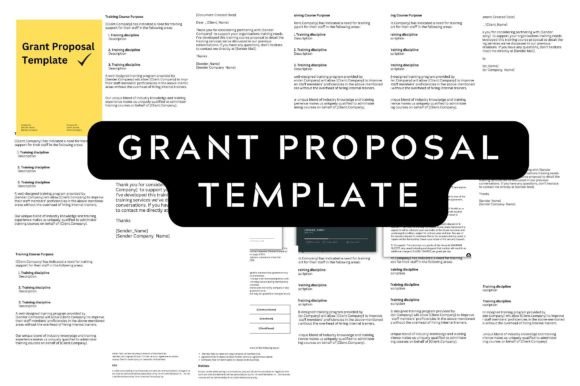
Elevate Your Brand with Professional Proposals
In the competitive landscape of modern business, the difference between securing a contract and losing an opportunity often lies in the quality of your presentation. A well-crafted Proposal for Conducting Training Program does more than outline a schedule; it serves as a tangible reflection of your brand's identity and professionalism. For graphic designers, marketers, and small business owners, leveraging high-quality, editable templates is no longer just a convenience—it is a strategic necessity for building a robust visual presence.
When approaching a new project, whether it is a corporate training initiative or a grant application, the visual design sets the tone before a single word is read. Utilizing a premium, printable template allows you to focus on the content while ensuring the aesthetic aligns with current design trends. These resources are specifically engineered to help businesses look professional instantly, removing the friction of starting from scratch.
The Power of Visual Consistency in Branding
Brand identity is built on consistency. Every touchpoint, from a logo design to a printed proposal, must speak the same visual language. An editable proposal template provides a foundational structure that maintains this consistency across all your creative assets. By using a unified color palette, typography, and layout grid, you reinforce brand recognition and trust.
Modern aesthetics demand clarity and visual hierarchy. A cluttered document can obscure your message, whereas a clean, well-organized layout guides the reader's eye naturally through the information. This is crucial when presenting complex ideas, such as a training curriculum or a funding request. The right template ensures that your key points stand out, making your pitch more persuasive and memorable.
Practical Applications Across Design Disciplines
The utility of a versatile, drag-and-drop editable template extends far beyond a single document type. In the realm of graphic design and digital marketing, these assets serve as a springboard for various creative projects:
- Branding and Logo Design: Use the structural elements to create cohesive brand guidelines that accompany your proposals.
- Marketing Materials: Adapt the layouts for brochures, flyers, and one-pagers that support your main pitch.
- Social Media Graphics: Extract color schemes and typographic styles to create matching posts that drive engagement.
- Web and UI Design: Apply the visual hierarchy principles found in print to create intuitive user interfaces and landing pages.
- Editorial Layouts: Utilize the grid systems for magazines, whitepapers, and annual reports.
- Packaging Design: Translate the brand's visual language onto product packaging for a unified customer experience.
- Presentations: Convert the document structure into slide decks for dynamic live pitches.
Maximizing Efficiency with Editable Assets
Time is a designer's most valuable resource. Pre-built templates allow you to save priceless hours by eliminating the need to construct basic layouts manually. With tools like Canva, customizing these assets becomes a seamless process. You can easily modify images, adjust colors to match your specific brand identity, change fonts, and resize elements to fit any format, whether it is standard A4 for printing or digital screens for web distribution.
The flexibility to download files in various formats—including PNG, SVG, JPG, and PDF—ensures compatibility with any workflow. Whether you are preparing a high-resolution print run or optimizing a file for email delivery, having access to scalable vector graphics and raster images gives you complete control over the final output.
Tips for Selecting and Customizing Design Elements
To get the most out of these templates, consider the following design principles during customization:
- Maintain Readability: Ensure your chosen typography offers high contrast and legibility, especially for body text.
- Respect Visual Hierarchy: Use size and weight to distinguish between headings, subheadings, and body content.
- Align with Audience Expectations: Tailor the tone and style of the visuals to resonate with your specific target demographic.
- Ensure Scalability: Test how your design looks when resized to ensure no elements become pixelated or misaligned.
- Check Compatibility: Verify that your color choices remain consistent across both digital screens and printed media.
Ultimately, investing in quality creative assets like an Editable Proposal For Conducting Training Program is an investment in your business's perceived value. It signals to clients and stakeholders that you pay attention to detail and care about the quality of your deliverables. By integrating these professional templates into your design workflow, you not only enhance the aesthetic appeal of your communications but also strengthen your overall brand narrative, paving the way for greater success in every venture you undertake.